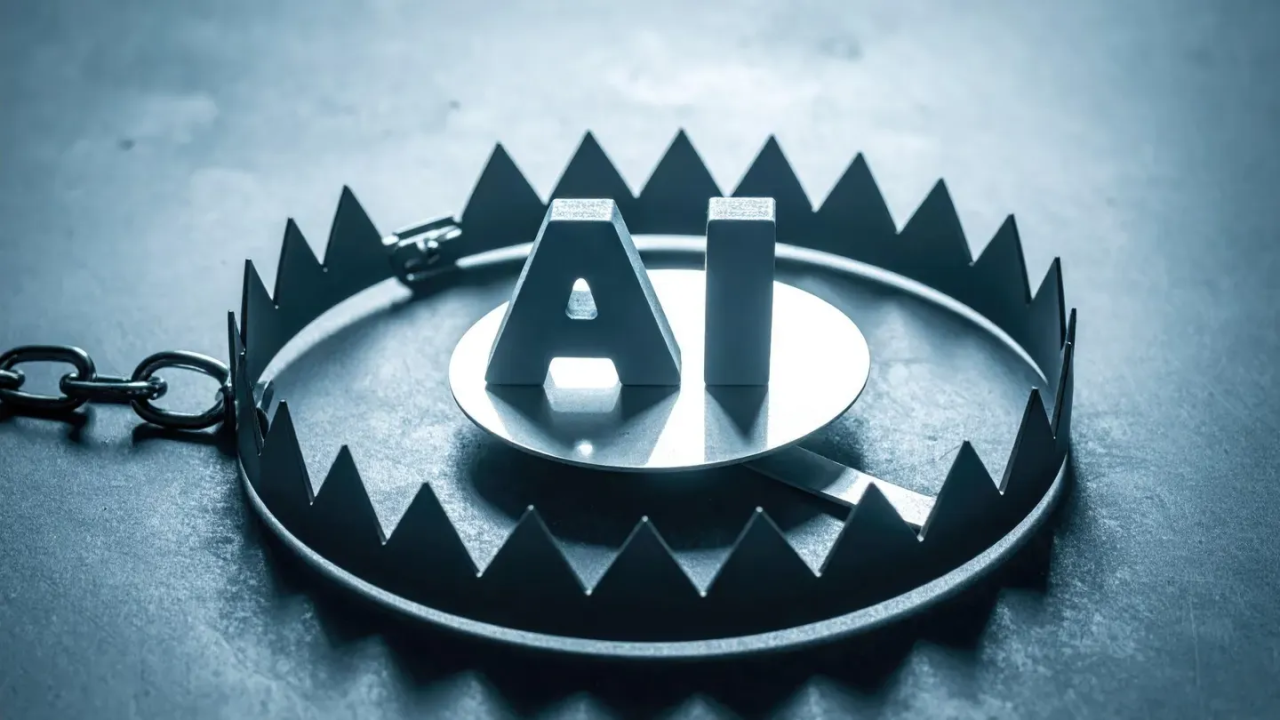
“Failure Trap” is a strong, specific problem for employers. It is not hyperbolic; it is appropriately alarming, and it describes a real mechanism rather than an emotional mood.
Most companies can tell you, in specific percentages, how much faster AI has made their workforce. Far fewer can tell you whether it has made their workforce more trusted, or whether it has quietly built a structure where employees can't win no matter what they do. That second question turns out to be the more important one. And a study released this week gives it a number.
The Numbers
The IBM Institute for Business Value, working with Oxford Economics, surveyed 1,500 CHROs and senior executives and 8,800 full-time employees across dozens of countries this spring. Seventy-one percent of CHROs named the ability to supervise, validate, and override AI outputs as the single most essential workforce skill of the AI era.
Employees don't see it that way. Only 29% ranked judgment as important to their own work, a 42-point gap between what leadership says matters most and what the workforce believes matters at all.
It gets more uncomfortable from there. Sixty percent of employees said they worry AI is eroding their own skills, and critical thinking was the capability named most often as slipping away. Among those worried, three out of four say the erosion has already started. Read those numbers together and a picture forms, not of employees who dislike AI, but of employees who've been asked to hold a responsibility that was never actually handed to them.
The Central Issue: Mixed Messages, Mismatched Actions
It's tempting to read this as a training problem: employees just need a workshop on "AI judgment," and the gap closes. That's the comfortable answer, and it's almost certainly the wrong one. You cannot be responsible for a decision without the authority to make it. That's not a communications failure. It's a design failure, and it traps the person caught inside it.
Responsibility Without Authority
Picture the position most employees are actually standing in when an AI system hands them a recommendation. No move protects them.
Follow the recommendation, and if it's wrong, the consequence is theirs, with no record that they exercised any judgment at all, because they weren't positioned to exercise any. Challenge the recommendation, and they've slowed the process, missed the productivity target built around AI-assisted speed, and taken on the risk of looking difficult for a call that might not even be vindicated. Do neither, stay quiet, let the system's answer stand by default, and they're still accountable for a decision they never actually made.
That's not a morale problem. It's a structural failure trap: an employee is handed the responsibility for an outcome without ever being handed the authority to shape it. Whichever way they move, the design of the work has already decided they lose.
The trap isn't hypothetical; it's sitting inside ordinary decisions right now. An AI system can process five hundred resumes in the time it takes a recruiter to read three. But it can't tell you whether the screening criteria quietly excluded strong nontraditional candidates. It can't recognize when a ranking reflects a biased historical pattern rather than genuine fit. It can't weigh the context a resume doesn't capture. Someone still has to catch that, and if that person doesn't have the standing, the time, or the organizational backing to actually override the system, the trap has already closed before they've made a single decision.
This is where the fix stops being an employee problem and becomes a leadership one. You cannot ask a person to be responsible for a decision and simultaneously withhold the authority to make it. That combination isn't a trust gap between two parties; it's something one party built. Which means it's also the one party that can tear it down.
The data backs this up structurally, too: just 26% of organizations in the IBM study have clearly defined which activities should be human-led, which should be AI-assisted, and which should be handed fully to the machine. Most companies have deployed the tools before deciding who's actually in charge when the tool is wrong.
The Way Out of the Trap
If responsibility without authority is what closes the trap, the way out is giving employees the actual, structural capability to exercise judgment, not just permission to, in theory. That capability has six specific parts, and an organization has to build room for all six or the trap stays closed regardless of what it says in the town hall:
Framing the problem correctly before accepting an AI-generated answer to it
Verifying the output against what's actually true
Detecting bias, gaps, or missing context the system couldn't see
Applying context the data doesn't capture
Deciding whether to accept, adjust, escalate, or reject the recommendation
Owning the outcome either way
Notice what this list requires that most organizations haven't provided: time to verify, standing to escalate without penalty, and a definition of what "override" actually means in practice. Human judgment isn't the opposite of AI, it's the capability that makes responsible AI possible. Without these six things built into the actual workflow, "use your judgment" is a sentence with no floor under it.
The Real Question for Leadership
The right question for a CEO or CHRO isn't "do our people like using AI?" It's: have we designed the work so people can use it without walking into a trap?
That comes down to four leadership responsibilities:
Define. Decide explicitly what AI should automate, what it should assist, and what stays human-led, in writing. Most organizations haven't.
Empower. Name who actually has the authority to challenge or override the system, and make sure that authority is real, not theoretical.
Equip. Give people the training and, critically, the time to exercise judgment. Judgment that isn't budgeted for won't happen under deadline pressure.
Account. Measure quality, risk, and workforce impact, not just speed. If the only metric that matters is throughput, judgment will always lose to it.
The data shows this pays off. Where organizations have built judgment into how work actually gets done, 62% of CHROs report employee confidence in AI-enabled decisions is growing. Where they haven't, 57% report confidence declining. This isn't a cultural nicety; it's measurably showing up in how well technology performs.
The Bigger Thought
The competitive advantage of the next decade won't belong to the organizations that automate the most work. It will belong to the organizations that dismantle the trap, that give people real authority to match the responsibility they've been handed.
The question isn't whether AI can do more of the job. It's whether organizations are building the structure that lets people know what AI should decide, what they should decide, and when they have the standing to stop and challenge the machine without it costing them.
Right now, most organizations haven't answered that question. They've deployed the technology and left employees holding the consequences.
That's not a trust gap. It's a trap they built. And it's theirs to unbuild.
The DaMar Solutions Consulting Group is dedicated to unlocking organizational excellence by helping you optimize your human resources, empower your workforce for sustainable peak performance, and support an effective talent acquisition strategy to remain competitive well into the future. For more information, visit https://www.damarstaff.com/consulting